
A thoughtful concern came up after Billy Bostickson found our COVID-19 discussion useful: what happens if people who strongly support one side mobilize more voters? And if voting is restricted to “experts,” could that introduce a different kind of bias?
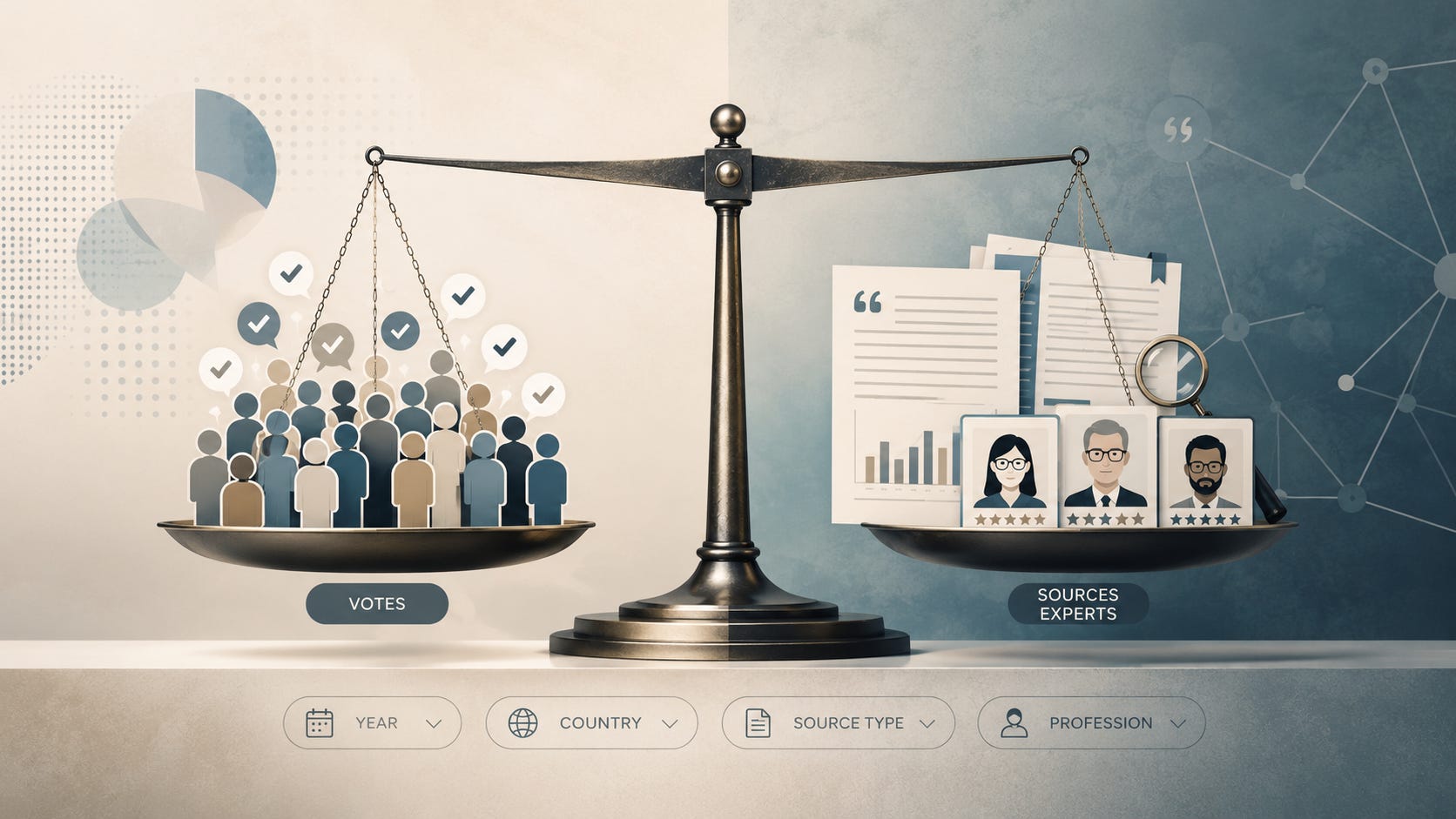
My view is that vote counts are the weakest part of the signal. The sourced quotes and the arguments behind them are what I would actually stand behind. Voting is more of a participation layer than a measure of truth.
Rather than deciding whose opinion should count, we want to give readers the tools to decide how they interpret the results.
You can already segment contributions by year, country, and source type, including sourced quotes, email-verified users, and phone-verified users. Profession and expertise are natural next additions.
Because we already integrate Wikidata, we could identify professions, qualifications, and awards for people with a Wikipedia entry. We would then need another way to represent experts who are not on Wikipedia.
This approach avoids baking a single gatekeeping decision into the result. Readers could compare the overall view with the views of epidemiologists, specialists in other relevant fields, or those who dissented from the majority.
Canvassing will happen, and mobilization will not be symmetric, so I would not treat the totals as a scientific poll. But greater participation also means more sourced perspectives on YouCongress, which is valuable regardless of where the majority lands.